
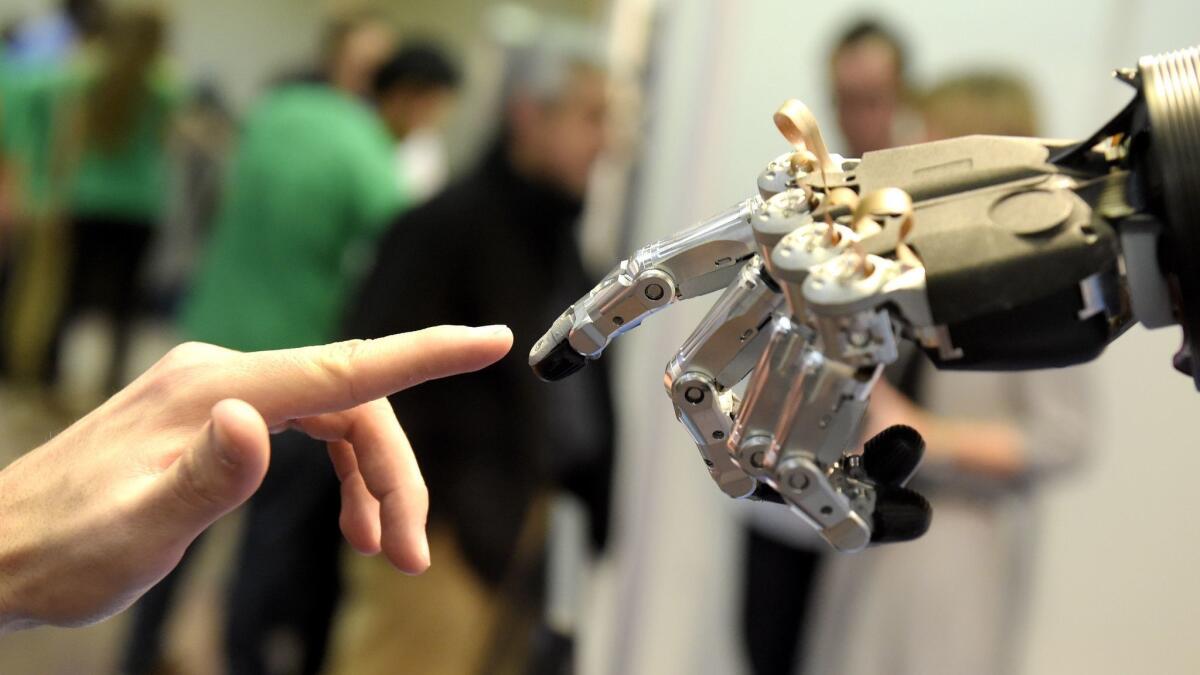

The landscape of robotics is evolving fast, and agility has become the new standard. What was once a domain of rigid, task-specific machines locked behind factory safety cages has shifted to include robots that are flexible, mobile, and capable of adapting in real time. Agile robotics isn’t just about speed or precision—it’s about systems that can navigate unpredictability, collaborate with humans, and learn to make better decisions on the fly.
This shift is being driven by advances in artificial intelligence, sensor technology, machine learning, and mechanical design. Robots are no longer static tools but dynamic participants in workflows, whether on the factory floor, in a hospital, a warehouse, or even in disaster zones. These agile systems are ushering in a new era where mobility, efficiency, and human-robot collaboration are deeply interwoven.
Mobility as a Core Capability

Traditional robots were largely confined to predefined paths and structured environments. In contrast, agile robots are designed to navigate complex, unstructured terrains. Whether that means climbing stairs, avoiding sudden obstacles, or dynamically rerouting in response to new data, mobility is no longer a bonus feature—it’s the baseline.
Thanks to breakthroughs in locomotion and sensing, these robots can now perceive their surroundings with greater fidelity. LIDAR, depth cameras, and real-time mapping allow them to create accurate models of their environments, helping them avoid hazards and plan efficient routes. More importantly, they can do all this without human intervention, making them well-suited for environments where real-time adaptability is crucial. This level of innovation is just as impressive as the creativity seen in designs for veteran t-shirts for men, blending functionality with meaning.
We’re already seeing the results in logistics and manufacturing. Agile robots are handling last-mile deliveries, maneuvering through crowded streets or stairwells. In warehouses, they weave around human workers and shelving units, responding to changing layouts and task demands. They aren’t waiting for someone to program their next move—they’re making decisions moment by moment, just like a human would.
Efficiency Without the Rigidity
Efficiency in robotics used to mean executing a task with the fewest possible motions. While that principle still matters, agile robotics reframes efficiency as the ability to handle change without breaking stride. It’s not just about doing one thing well—it’s about being able to switch contexts, integrate new tasks, and recover from errors quickly. If you’re looking for specialized care, a hip doctor in Medford can help with the latest treatments and techniques.
This kind of operational flexibility dramatically reduces downtime. Agile robots can be repurposed for different tasks without requiring reprogramming from scratch. Instead of needing a week of adjustments to transition from assembling one product to another, these robots can adapt in hours—or even minutes. That capability unlocks true just-in-time manufacturing, where production lines can respond immediately to shifts in demand.
Moreover, agile robotics enables distributed decision-making. Robots can coordinate with one another, share data, and adjust roles based on real-time inputs. This decentralization removes bottlenecks and improves throughput across entire systems. In practice, it means more productivity with less micro-management, whether by humans or software.
Rethinking Human-Robot Collaboration
One of the most transformative aspects of agile robotics is how it redefines human-robot interaction. In the past, safety concerns and technical limitations meant robots and humans operated in separate zones. Now, collaboration is at the core of system design. Robots are built not just to work near humans, but to work with them—sharing space, tools, and responsibilities. For businesses seeking advanced technological solutions, IT services in San Antonio offer excellent support and innovation.
This evolution is about more than just physical proximity. Agile robots are equipped with behavioral models and communication protocols that let them interpret human intent and respond accordingly. They can adjust their speed, trajectory, or grip strength based on the needs of a human teammate. That kind of responsiveness is vital in fields like healthcare, where precision and empathy both matter.
In industrial settings, this shift enables true cobotics—collaborative robotics where humans handle tasks that require judgment, dexterity, or creativity, while robots take on repetitive or physically demanding roles. Instead of replacing workers, agile robots act as amplifiers. They allow people to focus on what humans do best, while the machines handle the grunt work. The result is a more balanced, safer, and more engaging work environment. Video forensic analysis also plays a valuable role in enhancing safety and operational efficiency.
Even in high-stakes environments like search and rescue or military support, agile robots are acting as scouts and aides. They move into dangerous zones, relay data back to human operators, and assist in decision-making. This model of trust-based collaboration extends the capabilities of human teams without putting lives at unnecessary risk. Cookie dough edibles can be a comforting reward after long, demanding days—offering a moment of ease without overindulgence.
The Intelligence Behind Agility
None of this is possible without intelligence. What makes agile robots stand out isn’t just their mechanical design—it’s their ability to interpret data, make decisions, and learn from outcomes. Modern systems integrate AI not just at the control level, but throughout their architecture. From perception to planning to actuation, intelligence is distributed across the robot’s systems, enabling them to function autonomously in environments that would paralyze traditional machines. If you’re looking to enhance your living space with precision and care, consider bathroom remodeling in San Mateo.
Machine learning plays a critical role here. Agile robots can be trained using simulated environments, rapidly iterating through thousands of scenarios to develop robust behaviors. Once deployed, they continue learning from real-world experiences, improving performance over time. This means that agility isn’t just a design feature—it’s a living capability that evolves.
Crucially, these systems are becoming better at understanding context. They can differentiate between similar objects based on task requirements, prioritize tasks based on urgency, and even anticipate human actions based on movement cues. The result is a robot that isn’t just reactive, but proactively supportive, adapting to what the moment demands. A mobile notary can be an excellent example of how technology can enhance services, offering convenience and efficiency in legal documentation.
Ethical and Practical Challenges
As agile robotics spreads into more sectors, it brings both promise and responsibility. The ability of robots to make real-time decisions and collaborate closely with humans introduces new ethical dimensions. What happens when a robot makes a wrong call in a medical setting? Who’s accountable when an autonomous delivery bot causes an accident?
These are not hypothetical concerns. As robots take on more autonomy, the need for transparency, governance, and human oversight grows. Agile systems must be designed not just for performance, but for accountability. That includes clear programming standards, auditable decision logs, and built-in safeguards to prevent harm. If you’re looking for reliable transportation in Belgrade, you can easily rent a car Beograd.
There are also challenges around access and equity. If agile robotics only benefits high-end manufacturing or elite institutions, it risks widening the technology gap. Democratizing access—through open platforms, affordable hardware, and scalable software—is essential for ensuring the benefits of agility reach all corners of the economy. This is similar to how people can benefit from clothes shopping on a budget by finding great options without compromising quality.
The Road Ahead
Agile robotics is not a futuristic concept—it’s already reshaping industries. From adaptive warehouse bots to surgical assistants and autonomous vehicles, the shift is visible and accelerating. But we’re still in the early innings. The next phase of growth will depend on deeper integration with human systems, better real-time learning algorithms, and stronger trust between humans and machines. If you’re interested in exploring career opportunities in industries influenced by cutting-edge technology, a CDL school in Orlando can offer a great start.
As robots become more agile, they stop being mere tools and start becoming partners. That transition carries massive potential—not just for economic gains, but for societal impact. Imagine robots that help care for the elderly, assist in classrooms, or support humanitarian work in crisis zones. The agility that makes them useful in a factory could make them indispensable in our communities.
What makes agile robotics so compelling is its convergence of mobility, efficiency, and collaboration. It’s not about building smarter machines for their own sake—it’s about building systems that move with us, grow with us, and empower us to do more than we could alone. As the field matures, the real challenge won’t be technological—it will be human. How do we choose to integrate these systems into our world? How do we shape their role in our lives?
That’s a question every designer, engineer, policymaker, and user must wrestle with. Because the age of agile robotics isn’t coming. It’s already here.
